Why is my AC not cooling?
A central system moves heat out of your house. When the house stays warm, something in that chain has stopped: the air is not moving, the outdoor unit is not running, or the refrigerant circuit cannot carry heat away. The symptom you notice usually narrows things down quickly.
Warm air from the vents while the outdoor fan spins often points toward the compressor, a failed capacitor or a refrigerant problem. Weak airflow from every vent points toward a clogged filter, a frozen indoor coil or a failing blower. A unit that does nothing at all points toward power, the thermostat or a safety switch.
- Warm air at the vents, outdoor unit silent: electrical part or compressor.
- Weak airflow everywhere: filter, blower or iced coil.
- Ice on the indoor coil or refrigerant line: low airflow or low refrigerant.
- Water around the indoor unit: clogged condensate drain.
- Short cycling, on and off every few minutes: thermostat, sizing, airflow or a safety trip.
Checks that are safe to do first
A few things are worth ruling out before you schedule a visit, and none involve opening panels or touching wiring.
- Set the thermostat to cool, lower than the room temperature, and confirm it has power and fresh batteries if it uses them.
- Replace a dirty air filter. A packed filter is one of the most common reasons a system struggles.
- Check that the breaker for the air handler and the outdoor unit has not tripped. Reset it once only. A breaker that trips again means stop and call.
- Make sure supply and return vents are open and not blocked by furniture or rugs.
- If you see ice, switch the system to fan only so it can thaw, and do not chip it off.
Refrigerant, electrical and airflow problems
Refrigerant does not get used up like fuel. A properly sealed system keeps its charge for years, so low refrigerant means there is a leak somewhere, and topping it off without finding the leak only delays the next failure. Handling refrigerant also requires proper equipment and training, so it is not a homeowner task.
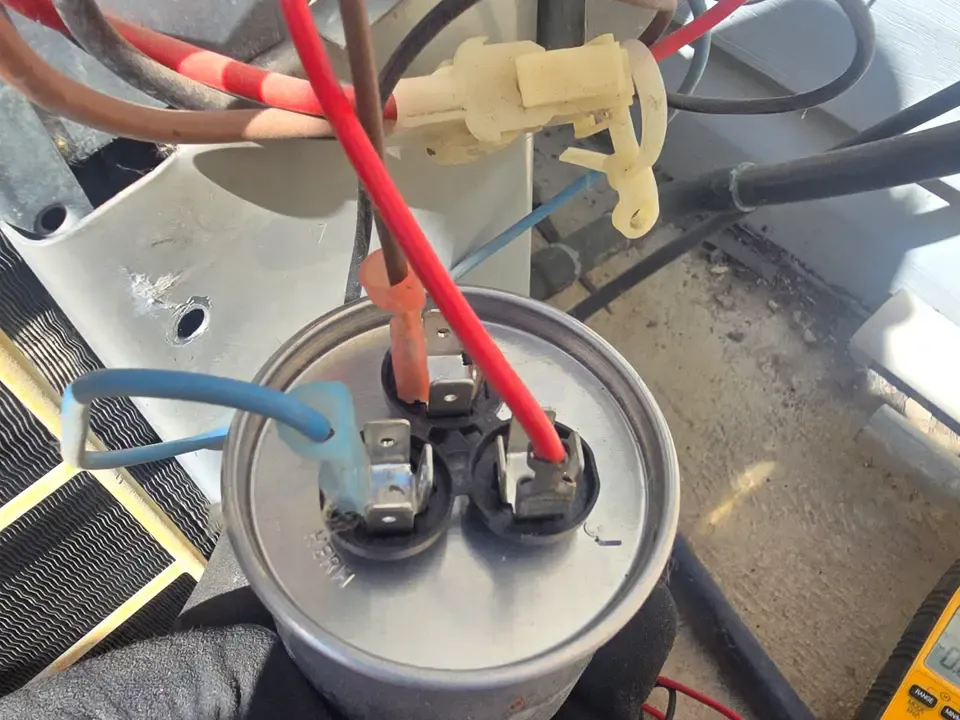
Electrical faults are the most frequent repairs. Capacitors help motors start, contactors switch power to the outdoor unit, and they wear out with heat and cycling. A technician tests them with a meter rather than guessing. Airflow faults include failed blower motors, dirty coils and leaky or crushed ductwork, and they often hide behind a complaint of uneven rooms.
During a diagnostic visit, a technician typically checks thermostat operation, voltage and amperage at the outdoor unit, temperature drop across the indoor coil, airflow, the condensate drain and the condition of the coils. The goal is a clear explanation of what failed and what your options are before any repair begins.
What affects the cost of AC repair
Repair cost depends on which part failed, how hard it is to reach, and whether the system uses an older refrigerant that is now harder to source. A small electrical part is a very different job from a compressor or coil. Ask for the diagnosis and the repair scope in plain terms, and ask what else the technician noticed that may fail soon.
Repair or replace an older AC
A system in its early or middle years with a single failed part is usually worth repairing. An older system with a major component failure, repeated service calls or an outdated refrigerant is a harder call. Utah summers are short but hot, and a system that quits on the hottest week is a bad time to be deciding.
Think about age, how often it has needed work, whether your home was always uneven in temperature, and how much you plan to stay. If replacement looks likely, the AC installation page explains what that process involves.
Why call Rocket
Rocket is a locally owned father and sons team in West Jordan that handles plumbing, heating and air conditioning, so one company can look at the whole house. Regular hours run Monday to Friday, 7am to 5pm, with emergency hours listed as 24/7.
Frequently asked questions
Why is my air conditioner running but the house stays warm?
The most common causes are a clogged filter, a frozen indoor coil, a failed capacitor or fan motor at the outdoor unit, or low refrigerant from a leak. Check the filter first, then call for a diagnosis if cooling does not return.
Should I keep running an AC that has ice on it?
No. Turn the cooling off and run the fan only until the ice melts. Running a frozen coil can damage the compressor. Ice means the cause still needs to be found, so schedule a visit.
Is it normal for my AC to leak water?
Some condensation is normal, but water pooling near the indoor unit usually means a clogged drain line or a frozen coil melting. Switch the system off and call before the water damages ceilings or flooring.
Can I add refrigerant myself?
No. A sealed system should not lose refrigerant, so low levels mean a leak. Handling it requires proper equipment and training, and adding more without a repair only repeats the problem.
How do I know if my AC is too old to fix?
Look at the unit age, repair history and refrigerant type listed on the data label. A major failure on a long running system, or repeated breakdowns, usually points toward discussing replacement.
What does an AC diagnostic visit cost?
The visit starts with an $89 trip charge for diagnosis. If Rocket does the work during that visit, that charge is waived. If the repair is scheduled for another day, the $89 is credited toward the repair price, so you are not paying for the diagnosis twice.