When does furnace repair make sense?
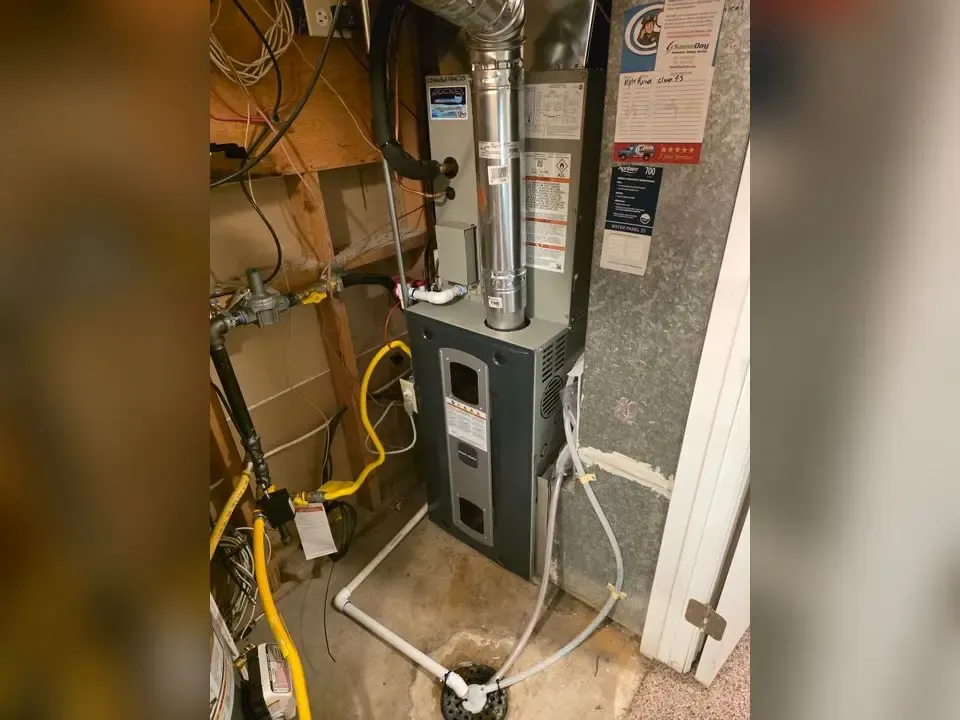
Most furnace calls are small. An igniter, flame sensor, pressure switch, capacitor or control board fails, and a technician replaces it. If the furnace is otherwise sound and has not been a repeat offender, repair is usually the sensible route.
- It is within its normal service life.
- The failed part is inexpensive relative to the unit.
- The fault is a one time event rather than the third of the season.
- Combustion, venting and the heat exchanger tested clean.
- Heat is even across the house and bills look stable.
Age, repair cost and efficiency
Age is the first filter. A furnace past fifteen years or so is in the zone where major failures become likelier, though condition matters more than the number. Look at the repair estimate beside the age. Spending a large share of replacement value on a very old unit buys little, since the next part may fail soon.
Many technicians use a loose rule that combines age and repair cost, but it is a prompt for discussion, not a formula. Add in how often the furnace has needed service lately. Two repairs in one winter on an older unit is a different story from one repair on a younger unit.
A repair also needs to be judged by what else is nearby. Technicians often notice a corroded flue, a rusty burner box or a worn blower while they are inside the cabinet, and those observations should be part of your decision rather than a surprise later. Efficiency counts too. Older furnaces waste more of their fuel as exhaust, and newer ones are designed to use less. Compare the age and efficiency rating on your data label with a modern replacement, then consider how many years you will stay in the house to judge whether savings can matter to you.
Signs replacement may be necessary
Some findings should push you toward replacing rather than repairing.
- A cracked or corroded heat exchanger, which is a safety hazard.
- A failed blower motor or control package on a unit near the end of its life.
- Repeated breakdowns across seasons.
- Parts that are obsolete or hard to find for an older model.
- Uneven heating or constant short cycling that points to poor sizing or a tired unit.
- Carbon monoxide alarm activations with a confirmed furnace cause.
Questions to ask before deciding
Bring these to the technician, and ask for the answers in plain language. A good answer names the part, the cause and the likelihood of a repeat, and it separates what must be done now from what can wait.
- How old is the furnace, and what does the data label say about its efficiency?
- What exactly failed, and what other parts look worn?
- Did you test the heat exchanger, venting and combustion, and what did you find?
- What does the repair cost, and what happens if another part fails next month?
- If I replace it, what size is right for my house, and do the ducts need work?
- What changes if I install variable speed or two stage equipment?
- Does the replacement include the thermostat, venting and permits?
Making the call in a Utah winter
If your furnace dies in freezing weather, the first goal is a safe, warm house, and a repair that gets you through the week can be a reasonable bridge even when replacement is likely. Get a written diagnosis, then plan the replacement on your timeline. If you smell gas or a carbon monoxide alarm sounds, leave first and call from outside. Rocket handles heating in the Salt Lake Valley, and you can reach the team at (385) 722-7638, with emergency hours listed as 24/7.
Frequently asked questions
Is there a simple rule for repair versus replace?
Technicians often weigh age against repair cost, but it is a guide. Include the failure type, safety, repair history and your plans for the home. A cracked heat exchanger overrides any rule and points to replacement.
Can I repair a furnace with a cracked heat exchanger?
Generally no. A cracked heat exchanger can leak combustion gases, including carbon monoxide, into the air you breathe. Most technicians recommend replacement, and you should keep the furnace off until it is addressed.
Will a new furnace lower my heating bills?
A more efficient model uses less fuel for the same heat, so bills often fall, but the amount depends on the old unit, your ducts and how you use the house. Ask for a comparison based on your actual equipment.
Should I replace the furnace and AC together?
If both are old, doing them together can simplify matching equipment and ductwork. If one is relatively new, a technician can check compatibility instead. Do not replace a working system just to bundle the job.
How long does a furnace replacement take?
A straightforward swap often takes a day, but changes to venting, gas lines or ducts add time. Ask the installer for a plan that covers heat in the house while work is under way.