How tankless and tank water heaters work
A tank heater holds a set volume of water, often forty to eighty gallons in a house, and keeps it at temperature using a gas burner or electric elements. When you open a tap, hot water leaves the top and cold water refills the bottom. Once the stored supply is used faster than it recovers, the water turns cold until the tank heats again.
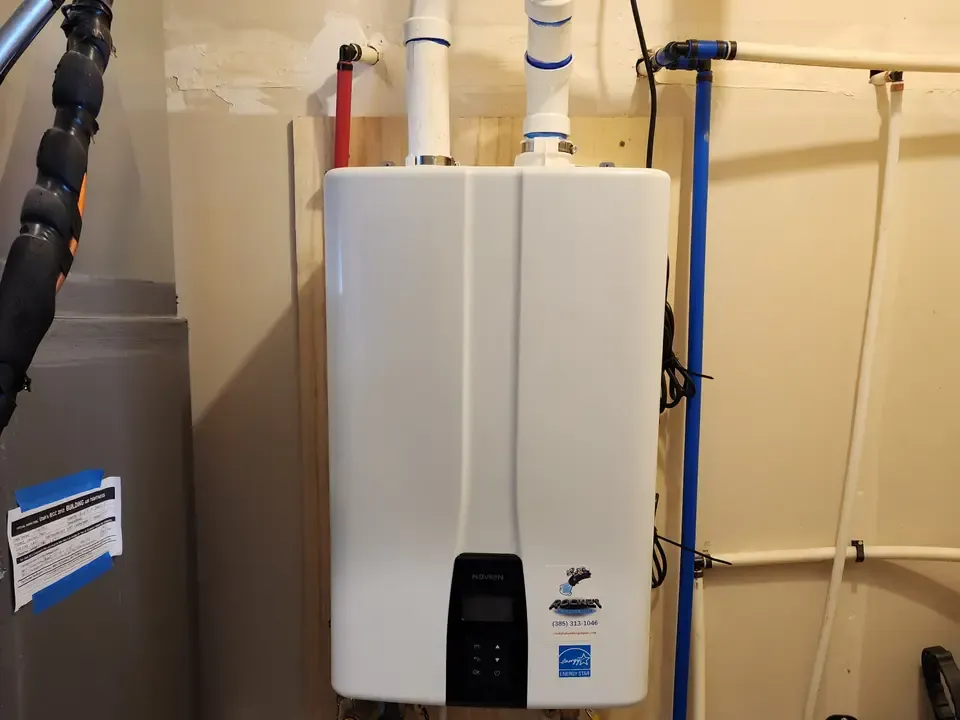
A tankless heater has no storage. When a hot tap opens, flow sensors fire a burner or a bank of elements that heat water as it passes through a heat exchanger. Supply is limited by flow rate and temperature rise, not by tank size. If too many fixtures run at once, the unit may not keep up, and a larger model or a second unit can fix that.
Installation differences
Swapping a tank for another tank is usually the simpler job, because the gas line, vent and water connections already fit. Moving to tankless is often more involved.
- Gas tankless units commonly need a larger gas line than a tank heater, since they burn fuel faster.
- They need proper venting, often with different materials than a tank, and the vent route has to be planned.
- Electric tankless units can draw a lot of power and may need panel capacity and new circuits.
- Water lines and a condensate drain may need work on high efficiency models.
- Altitude matters: manufacturers publish instructions for installing at higher elevation, and Utah homes should follow them.
- Permits and inspections apply to water heater work, so check with your local building department.
Energy use and hot water capacity
A tank loses some heat through its walls even while nobody uses hot water, which is called standby loss. A tankless unit avoids that, so it can use less energy for households that draw hot water in short bursts. The savings shrink in a home that uses a great deal of hot water through the day, and they can be modest compared with the extra equipment and installation cost, so do not assume a payback without working it through for your house.
Capacity is where people get surprised. A tank gives you a big reserve that handles several showers and a washing machine in sequence. A tankless unit gives you unlimited duration but a ceiling on simultaneous flow. Cold incoming water in a Utah winter lowers that ceiling because the unit must raise the temperature further.
Hard water is a real factor in the valley. Scale builds in tank bottoms and inside tankless heat exchangers. Tankless units usually need periodic flushing, and a softener or conditioner may be worth considering. See the guide on whether Salt Lake City water is hard for how to find your own level.
Lifespan and maintenance
Tank heaters typically last roughly ten to fifteen years, and tankless units are often described as lasting longer when maintained, though results depend on water quality and use. A tank benefits from an occasional flush and an inspection of its anode rod. A tankless unit needs descaling on a schedule that the manufacturer sets.
Which system fits your home
Tank usually fits when you want the simplest replacement, the budget is tight, or your fuel and venting make tankless awkward. Tankless usually fits when floor space is limited, hot water use is steady but spread out, or you are tired of running out. Think about how many people shower in the morning, whether you have a soaking tub, and what your gas and electrical service can support.
A plumber who looks at your gas line, vent path and panel can tell you what each option really takes. Rocket serves the Salt Lake Valley from West Jordan, and you can call or text (385) 722-7638.
Frequently asked questions
Will a tankless water heater save me money?
It can reduce standby heat loss, but the result depends on how much hot water you use and what the installation costs. Run the numbers for your household before assuming it pays for itself.
Can a tankless heater run two showers at once?
Usually yes if it is sized for it, but each unit has a flow limit. Add a dishwasher or washing machine and a small model can fall short. Ask for a sizing based on your fixtures and winter water temperature.
Do tankless heaters work in cold Utah winters?
They work, but incoming water is colder, so output flow drops. Units installed where pipes can freeze also need protection. Follow the manufacturer instructions for location and freeze risk.
How do I know when my tank heater needs replacing?
Warning signs include rust colored hot water, rumbling noises, leaks near the base, and age past about a dozen years. A leak from the tank itself means replacement, so shut off the water and call.
Does hard water damage tankless heaters?
Scale can clog the heat exchanger and reduce flow and efficiency. Regular descaling helps, and treating the water may help more. Check your local water quality report to see how hard yours is.