Is cold air at startup normal?
A short burst of cool air when the heat kicks on is normal. The ducts between the furnace and your rooms sit at basement or attic temperature, and the first air through them pushes that cooler air out before warm air arrives. Many furnaces also run the blower for a minute or two after the burners shut off, to pull the last heat out of the heat exchanger. That air feels lukewarm at the end of a cycle.
What is not normal is air that stays cool for several minutes, or a furnace that warms up, then switches to cool air partway through and keeps the fan running. That pattern means the burners stopped while the blower kept going, and the furnace is usually telling you why.
Thermostat and fan settings
Start at the thermostat, because it is the easiest thing to rule out and it causes a surprising number of these calls.
- Fan set to ON instead of AUTO. With ON, the blower runs all the time, including between heating cycles, so you feel room-temperature air whenever the burners are resting. AUTO runs the fan only while the furnace is heating.
- Mode set to COOL or OFF. After a warm fall afternoon it is easy to leave the system in cooling mode.
- Set temperature below the room temperature. If the thermostat does not call for heat, the burners never light.
- Weak thermostat batteries. A screen that is blank or flickering can lose its connection to the furnace.
- A heat pump in defrost. If your home has a heat pump, it periodically reverses for a few minutes in freezing weather to melt frost off the outdoor coil, and air at the vents can feel cooler during that time. That is normal, and it should end on its own.
Filters, overheating and the limit switch
A clogged air filter is one of the most common reasons a gas furnace switches to cold air in the middle of a cycle. With too little air moving across the heat exchanger, the furnace gets hotter than it should. A safety control called the high limit switch notices the temperature and shuts the burners off, while the blower keeps running to cool things down. Once it cools, the burners may relight, then trip again. You feel that as warm air, then cool air, then warm again.
Closed supply registers and blocked return grilles cause the same problem. Furniture over a return, a rug over a floor vent, or several rooms with vents shut all choke the airflow.
- Turn the thermostat to OFF.
- Pull the filter and hold it up to a light. If you cannot see light through it, replace it with the size printed on its frame.
- Open supply vents in every room and clear anything sitting over the return grilles.
- Set the thermostat back to HEAT with the fan on AUTO and watch one full cycle.
- If the furnace keeps switching to cold air with a clean filter and open vents, stop resetting it and call for service. A limit switch that trips repeatedly is a symptom, and running the furnace that way can stress the heat exchanger.
Ignition, gas supply and the flame sensor
Most modern gas furnaces light with a hot surface igniter or an electronic spark, then use a flame sensor to confirm the burners actually lit. If the sensor is coated or the igniter is failing, the furnace tries to light, cannot prove a flame, and shuts the gas off for safety. Many models keep the blower running or retry a few times before locking out. The result is a fan that runs and vents that never warm up.
Gas supply problems look similar. If other gas appliances in the house also stopped, the issue may be the gas service rather than the furnace. That is a call to the gas utility, not a repair to attempt yourself.
Many furnaces have a small status light visible through a window in the lower panel, and a code chart on the inside of the panel door. Noting the blink pattern before you call gives the technician a head start. Do not remove the burner cover, adjust gas valves or try to clean parts inside the furnace. Those jobs involve gas and line voltage and belong to a trained technician.
- If you smell natural gas, do not touch light switches or the thermostat. Leave the house, then call the gas utility or 911 from outside.
- If a carbon monoxide alarm sounds, get everyone outside and call 911 before doing anything else.
Blocked vent pipes and condensate on high-efficiency furnaces
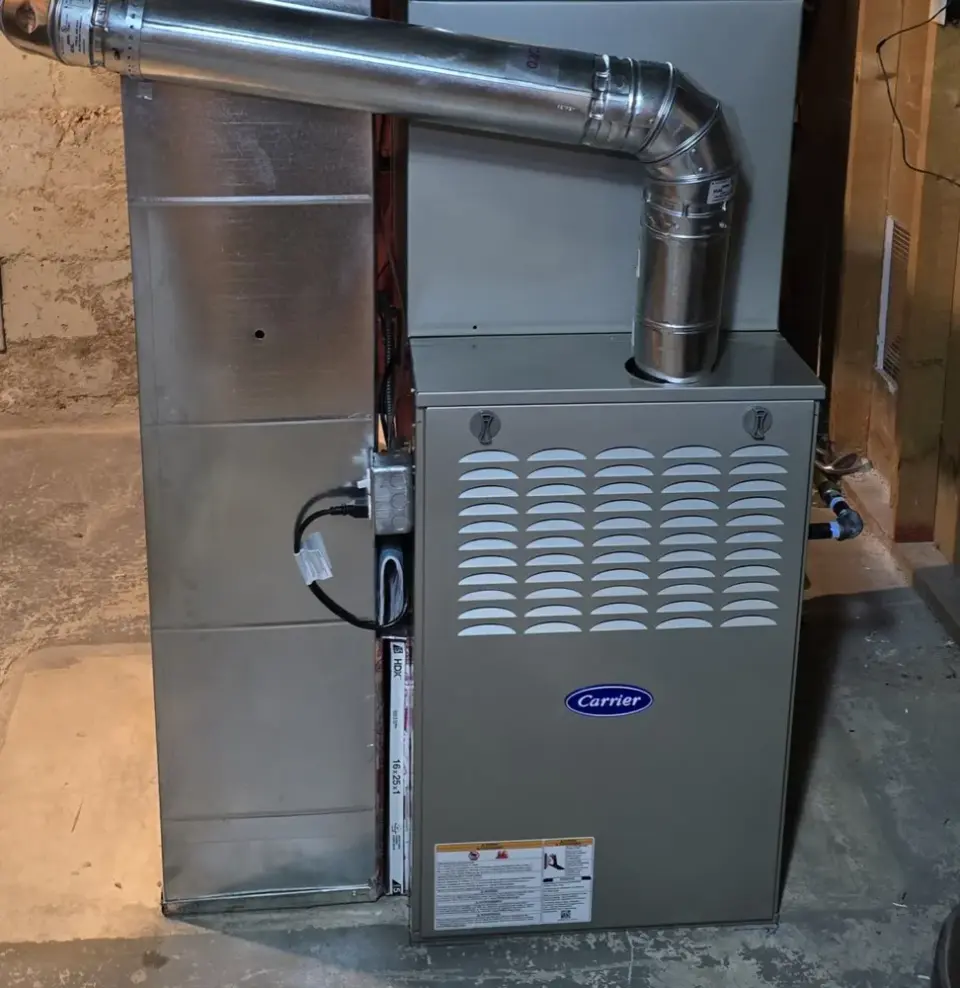
High-efficiency gas furnaces usually vent through two plastic pipes that leave the house through a side wall or the roof: one brings in combustion air, the other carries exhaust out. In a Salt Lake Valley winter those pipes can be buried by drifting snow, blocked by ice, or plugged by a nest. A safety switch detects the restriction and keeps the burners off, even though the blower may still run.
The same furnaces produce water as they run, and that condensate drains through a small tube to a floor drain or a pump. A kinked, clogged or frozen condensate line can back water up and stop the furnace. A condensate pump with a full reservoir or a failed float will do the same.
You can safely look at the outside pipes and clear loose snow away from them by hand. Anything past that, such as cutting into the condensate line or a pump that will not run, is a service call.
When to call for furnace repair
Once the thermostat is set to HEAT with the fan on AUTO, the filter is clean, the vents are open and the outside pipes are clear, cold air from the vents points to a part that needs a technician: the igniter, flame sensor, limit switch, pressure switch, control board or gas valve. Running the furnace on and off by flipping its switch will not fix any of those, and in freezing weather a house can cool down fast.
Rocket repairs gas furnaces and heat pumps across the Salt Lake Valley. A weekday diagnostic visit has an $89 trip charge, which is waived when the repair is done on that visit. When you call or text (385) 722-7638, mention the furnace age if you know it and any blinking light code you saw.
Frequently asked questions
Why does my furnace blow cold air for a minute and then get warm?
That is usually normal. Air sitting in the ducts cools off between cycles, and the first air through pushes it out. If warm air shows up within a minute or two and stays, nothing is wrong.
Can a dirty filter really make a furnace blow cold air?
Yes. A clogged filter restricts airflow, the furnace overheats, and the high limit switch shuts off the burners while the fan keeps running. Replacing the filter often solves it, but a switch that keeps tripping with a clean filter needs a technician.
Should I keep restarting the furnace if it keeps blowing cold air?
One reset after you check the thermostat and filter is reasonable. Repeated resets can mask a safety shutdown, such as an overheating heat exchanger or a failed flame sensor, so call for service instead of cycling it all day.
Is a heat pump supposed to blow cooler air than a furnace?
Heat pump air often feels milder than air from a gas furnace, even when the system is heating properly. Brief cool air during a defrost cycle in freezing weather is also expected. Air that stays cold for a long time is worth a service call.
Can snow stop my furnace from heating?
On high-efficiency furnaces that vent through plastic pipes on a side wall, yes. Snow or ice over the intake or exhaust can trip a safety switch. Clear loose snow by hand and keep the area around the pipes open through the winter.