When is furnace replacement necessary
Furnaces rarely fail without warning. Most give signs a season or two before the end, and acting on them lets you choose the timing instead of replacing in a cold snap.
- A cracked heat exchanger, which is a safety issue and generally ends the unit life.
- Repairs that keep recurring, especially several in one winter.
- Heating bills that creep up without a change in how you use the house.
- Rooms that never get comfortable, or a unit that cycles constantly.
- Rust, soot, or flame that looks lazy or yellow, plus any carbon monoxide alarm.
- A unit well past its typical service life, with parts getting hard to find.
Gas and electric furnace options
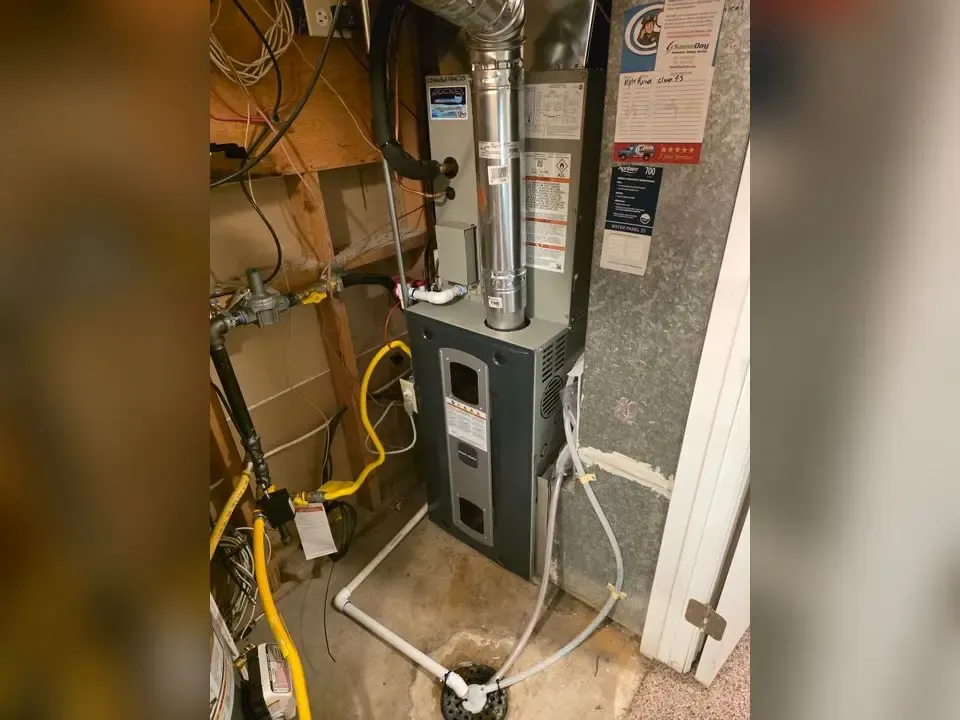
Most homes in the valley heat with natural gas, so gas furnaces are the common choice. They differ mainly in efficiency and staging. Standard efficiency units exhaust through a metal flue. High efficiency condensing units pull more heat from the exhaust, vent through plastic pipe and need a drain for condensate. Single stage furnaces run at full output, two stage and modulating models adjust to the weather and tend to feel more even.
Electric furnaces have no combustion and so no venting, which makes installation simpler, but electricity is often a costlier way to produce heat than gas. A heat pump is another route worth asking about.
Whatever you choose, ask how the unit handles higher elevation. Manufacturers publish altitude guidance, and some gas furnaces need adjustment above a certain elevation.
Choosing the right furnace size
Bigger is not better. An oversized furnace heats quickly, shuts off, and repeats, which wastes energy, adds wear and leaves some rooms cold. An undersized one runs without catching up on the coldest nights. The correct size comes from a load calculation that accounts for square footage, insulation, windows, air leakage, and the local design temperature, and not from matching the old nameplate.
The ducts matter as much as the furnace. Leaky, undersized or poorly balanced ducts can cancel the benefit of new equipment, so ask for them to be inspected.
- Have a load calculation done for the home as it is now.
- Inspect the ducts, returns and venting.
- Pick efficiency and staging that fit your budget and comfort goals.
- Confirm altitude requirements with the manufacturer instructions.
Installation costs and what to expect
Quotes vary because the work does. Price depends on the furnace model and efficiency, whether the venting or gas line needs changes, duct repairs, thermostat upgrades, permits and how hard the unit is to reach. Ask for the quote in writing with the equipment model listed, and ask what is included and what is not.
Installation typically takes most of a day. The crew shuts off power and gas, removes the old unit, sets the new one, connects gas, venting, condensate and electrical, then tests ignition, safety controls, airflow and combustion before leaving. Your local building department may require a permit and inspection, so confirm what applies.
Why call Rocket
Rocket is a locally owned father-and-sons team based in West Jordan. You can schedule a visit online or by text, and emergency hours are listed as 24/7 if your furnace fails outright.
Frequently asked questions
How do I know if I need a new furnace or just a repair?
Look at the age, repair history and the heat exchanger condition. A cracked exchanger means replacement, while a single failed part on a sound unit is usually repairable.
Is a high efficiency furnace worth it?
It depends on how much you heat and how long you plan to stay. These units use less gas but cost more upfront and need condensate drainage.
How long does a furnace replacement take?
Usually a day for a straightforward swap. Changes to venting, gas lines or ductwork add time.
Do I need a permit to replace a furnace?
Often yes, but rules vary. Ask your city or county building department what applies.
Can I keep my old ducts?
Sometimes. They should be checked for leaks, size and condition, since new equipment performs only as well as the air path allows.