Two housing eras inside one West Jordan
US Census Bureau American Community Survey estimates put the median West Jordan home in 1996. About 48 percent of the city’s housing was built from 1990 through 2009, and roughly a third came earlier, in the 1970s and 1980s. Only a small share predates 1970, and about one in six homes went up after 2010.
That split is more useful than a city name when you are deciding what to look at first. A house from 2003 and a house from 1978 can sit a mile apart and still have very different pipes, water heaters and heating equipment behind the walls. The build year is a starting point for questions, not a diagnosis of any particular home.
Homes from the 1990s and 2000s: the equipment is the first thing to age
In the newer core of the city the supply lines are usually not the problem yet. What wears out first is the equipment and the parts that move. A tank water heater commonly lasts around a decade, so many of these homes are on their second heater or should be planning for one.
- A water heater that rumbles, leaks at the base or runs out of hot water sooner than it used to
- Faucets and toilets that drip, run or need constant jiggling
- A furnace or air conditioner that is original to the house and starting to struggle
- Rooms that run noticeably warmer or cooler than the rest, which a mini-split can even out
Homes from the 1970s and 1980s: ask what the supply pipe is made of
The older West Jordan neighborhoods overlap two periods worth knowing about. Lead solder and lead pipe were banned from drinking water plumbing by the 1986 Safe Drinking Water Act amendments, so a home built before that may still have older solder joints. Separately, some homes built from roughly the late 1970s to the mid 1990s were plumbed with gray polybutylene supply pipe, which later fell out of use because of failures.
Neither fact tells you what is in a specific house. A technician can look at exposed pipe near the water heater, under sinks and where the main line enters, and a lab or utility test tells you what is actually in your water. If the original supply piping is failing, repiping replaces it with modern material.
Water treatment for West Jordan households
Hard water is common across the Salt Lake Valley, and it shows up as scale on fixtures, spots on dishes and sediment in water heater tanks. Rather than trust a number you saw online, read the water quality report your utility publishes for your address. The guide on whether Salt Lake City water is hard walks through how to read one.
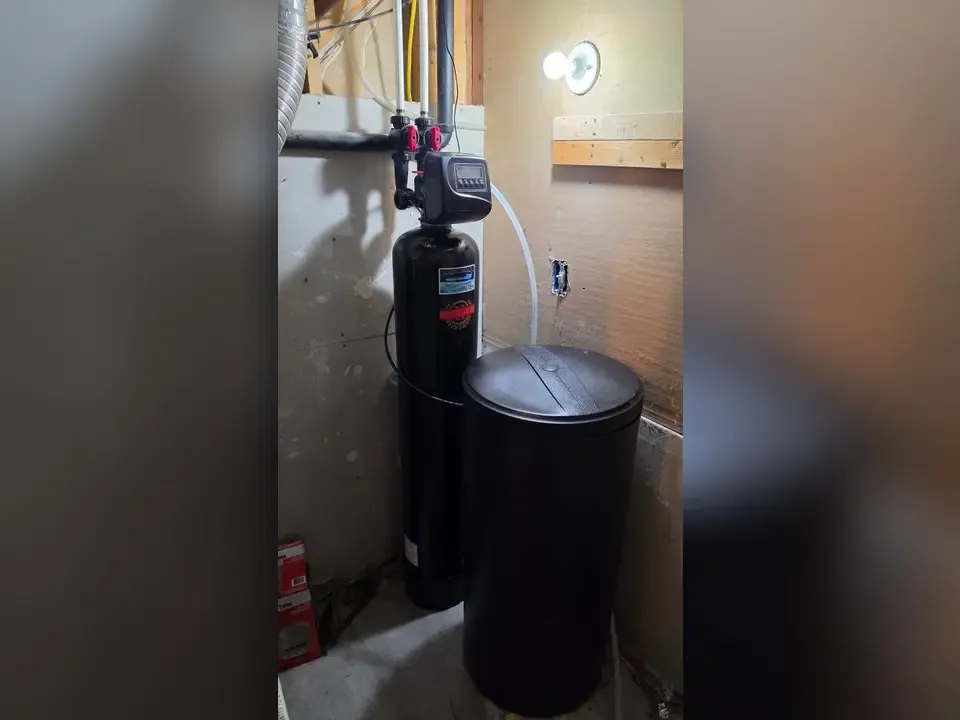
If the report and what you see at the tap point to a problem, a water softener addresses mineral scale and a filtration system addresses taste, odor or specific contaminants. They solve different problems, so the right choice depends on what you are trying to fix.
Heating, cooling and gas work from a West Jordan base
Rocket is a locally owned father and sons team, Bill and Kyle Bashford, working out of West Jordan. Alongside plumbing they handle furnaces, heat pumps, air conditioning, mini-splits and whole-home humidifiers, plus gas line work for a new range, dryer or outdoor appliance. You can schedule online, call or text to set a time.
Frequently asked questions
My West Jordan house was built in the late 1980s. Should I worry about polybutylene?
Not worry, but check. Some homes from roughly the late 1970s to the mid 1990s used gray polybutylene supply pipe. Look at exposed lines near the water heater or under sinks, or have a technician identify the material before deciding anything.
Does a house built before 1986 have lead in the water?
Not necessarily. Homes from before the 1986 ban may still have older solder joints, but the build year alone cannot tell you. Testing through your utility or a lab is how you find out what is actually coming out of the tap.
My 2000s home has never had plumbing trouble. What should I watch?
The water heater first. A tank model commonly lasts around a decade, so an original or early replacement unit in a house this age is worth watching for leaks, noise or shrinking hot water supply.
Is a softener worth it in West Jordan?
It depends on your own water. Pull your utility’s published water quality report, compare it with the scale you see on fixtures and in the water heater, and decide from there.