Is a tankless water heater right for your home
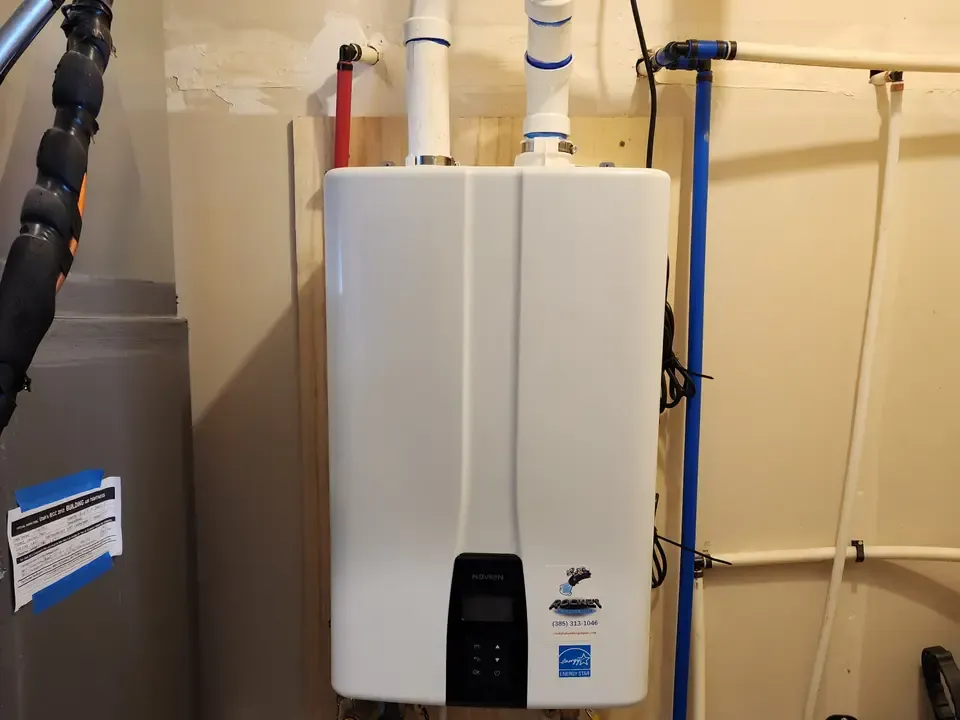
Tankless units heat water as it flows through a heat exchanger, so they do not run out the way a tank can. They also take up much less floor space because they mount on a wall. Those two traits appeal to households with long showers, soaking tubs, big families or tight utility closets.
They are not a fit for everyone. A tankless heater has a maximum flow rate, so running a shower, dishwasher and laundry at once can exceed what one unit delivers. Sizing is a matter of adding up the fixtures you use at the same time and the temperature rise needed in cold months, when incoming water is at its coldest.
- Good fit: limited space, long hot water demand, plans to stay in the home for years
- Needs a closer look: older homes with small gas lines, tight venting paths or limited electrical capacity
- Think twice: very low usage, where a smaller tank may be simpler and less expensive to maintain
Tankless installation requirements
A tankless install is more than swapping one box for another. Gas models usually need a larger gas supply line than a tank because they burn fuel quickly, and they require proper venting to the outdoors, often with sealed or special venting materials as the manufacturer specifies. Electric models need a substantial dedicated circuit, and the home's panel must have room for it.
Altitude matters here. Salt Lake Valley sits well above sea level, and combustion appliances may need adjustment per the manufacturer's instructions. Local building departments also set rules on permits, venting clearances and condensate drains, so a good installer checks those before work begins.
- Evaluate current fuel supply, venting route, electrical capacity and the location for the new unit.
- Size the heater to your fixtures and your coldest incoming water.
- Update gas piping, electrical circuit, venting and condensate drainage as required.
- Add isolation valves so the unit can be flushed in the future.
- Test temperature, flow and safety controls, and review the maintenance schedule with you.
Hard water and tankless maintenance
Minerals are the enemy of a tankless heat exchanger. Hard water deposits scale on the narrow passages inside the unit, which reduces flow, raises operating temperatures and can trigger error codes. Because hard water is common in the valley, you should read your water utility's published quality report to find the hardness number for your address.
Maintenance is simple but should not be skipped. Most manufacturers call for periodic flushing with a descaling solution, usually through the isolation valves, and for cleaning the inlet screen. A softener upstream of the heater reduces scale buildup and is worth discussing during installation.
- Flush the heat exchanger on the schedule the manufacturer gives
- Clean the inlet filter screen
- Watch for error codes, fluctuating temperatures or reduced flow
- Consider a water softener or filtration to protect the unit
Tankless versus tank replacement
A standard tank is usually simpler to install and has a lower starting expense, but it takes space, loses some heat while it stands and holds a finite supply. A tankless unit tends to cost more to install, may have a longer service life when maintained, and delivers continuous hot water within its flow limits.
The honest answer depends on what already exists in the house. If a tank sits in a closet with a vent and gas line in place, swapping like for like is straightforward. If you want to free up space or never run out, tankless might be worth the extra work. Ask for both options laid out, and decide based on your household instead of a general rule.
Why call Rocket for tankless
Rocket is a West Jordan company run by Bill and Kyle Bashford, and you can schedule online, call or text.
Frequently asked questions
Will a tankless heater give me endless hot water?
It gives continuous hot water up to its flow limit. If too many fixtures run at once, the temperature can drop, which is why sizing matters.
Do tankless heaters need a larger gas line?
Often yes, since they burn gas at a higher rate. A technician measures your existing line and tells you whether it needs to be upgraded.
How does hard water affect a tankless heater?
Scale builds inside the heat exchanger and reduces performance. Regular flushing and, in many homes, a softener help protect the unit.
How often does a tankless heater need maintenance?
Follow the manufacturer's schedule. Flushing is commonly recommended on a regular basis, more often where water is hard.
Can I replace my tank with a tankless unit myself?
This is not a good DIY project. It involves gas, venting, high amperage electrical work and permits, so it should be done by a qualified plumber.