Typical lifespan of tank and tankless water heaters
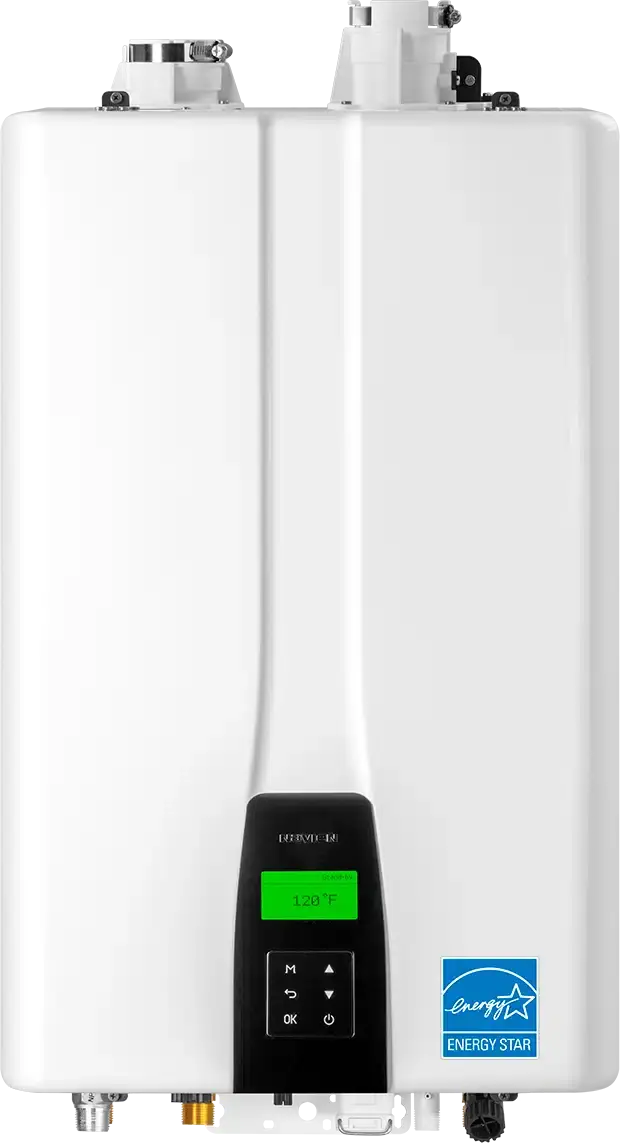
There is no fixed expiration date, but the industry rule of thumb for a standard storage tank, gas or electric, is roughly 8 to 12 years. Some last well past that; some fail early. Tankless water heaters have no tank of standing water to corrode, and manufacturers and the U.S. Department of Energy generally describe them as outlasting tank models when they are maintained. Heat pump water heaters are storage tanks with a compressor on top, so the tank itself ages much like a conventional one.
The number that matters for your home is not the average. It is how the heater has been treated: the quality of the water going into it, how hard it works, and whether anyone has ever flushed it or checked its anode rod. Two identical heaters installed in the same week in two different houses can reach the end years apart.
How hard water shortens a heater's life
Water across much of the Salt Lake Valley carries a lot of dissolved calcium and magnesium. When that water is heated, the minerals drop out. In a tank they settle on the bottom as sediment; in a tankless unit they coat the inside of the heat exchanger as scale. Your city or water district publishes a yearly water quality report that lists hardness for your area, and it is worth looking up.
- In a gas tank, a layer of sediment sits between the burner and the water. The burner has to run longer to heat through it, the bottom of the tank runs hotter, and the steel ages faster.
- In an electric tank, sediment can bury the lower heating element, which then runs hot and burns out sooner.
- In a tankless unit, scale on the heat exchanger reduces flow and heat transfer, which shows up as fluctuating temperature or error codes, and eventually as a failed exchanger.
- Every tank has a sacrificial anode rod that corrodes so the tank lining does not. Once the rod is used up, the tank itself starts to rust. Hard water and a softener both change how fast the rod is consumed, so it is worth having it checked on an older tank.
How to find your water heater's age
Most heaters do not have the install date written anywhere obvious. The age is usually hidden in the serial number on the label attached to the side of the tank or the front of a tankless unit.
- Find the rating label. On a tank it is normally a sticker on the side near the controls. On a tankless unit it is usually on the side or bottom of the cabinet.
- Write down or photograph the full serial number and model number.
- Look for a manufacture date printed on the label. Some brands show it directly.
- If there is no printed date, the date is usually encoded in the first few characters of the serial number. Each manufacturer uses its own format, so look up the decoding guide on the manufacturer's website or call its support line.
- If the label is missing or unreadable, a permit record from when the heater was installed, or a sticker left by the installer, may give the date.
Signs your water heater is near the end
Age alone does not mean a heater has to come out. What tips the decision is age combined with symptoms. These are the ones that matter most:
- Water pooling under the tank, or a damp ring around its base. A leak from the tank body itself cannot be repaired.
- Rusty or reddish hot water from several faucets, which can mean the inside of the tank is corroding.
- Rust or flaking on the outside of the tank, especially around the fittings at the top or the base.
- Rumbling, popping or cracking sounds while it heats, which usually means heavy sediment.
- Hot water that runs out much sooner than it used to.
- Repeated repairs in a short time, such as elements, thermostats or gas controls failing one after another.
Repair or replace an older water heater?
A failed part on a young heater is usually worth fixing. Elements, thermostats, igniters, thermocouples and valves can all be replaced. The same repair on a tank that is near or past the 10-year mark, with sediment or rust, is harder to justify, because the tank itself is often the next thing to go and a tank leak cannot be fixed.
Replacing before a failure also lets you choose rather than react. You can decide between a new tank, a tankless unit or a heat pump water heater, look at sizing, and schedule the work instead of shopping with no hot water. The tank versus tankless guide on this site goes through that choice in more detail.
Helping a water heater last longer
A few habits make a real difference, especially with hard water. Draining some water from a tank to flush sediment, following the manufacturer's instructions, slows buildup. Tankless units have their own descaling procedure in the owner's manual. Having the anode rod checked on a tank that is several years old can catch it before it is gone. A water softener reduces scale going into the heater. And keeping the temperature at the manufacturer's recommended setting avoids running the heater hotter than it needs to be.
Rocket repairs and replaces tank, tankless and heat pump water heaters, and installs water softeners, across the Salt Lake Valley. If you are not sure how old your heater is, text a photo of the label to (385) 722-7638 and ask.
Frequently asked questions
Does a tankless water heater really last longer than a tank?
Generally, yes, because there is no tank of standing water to rust through. That depends on maintenance, though. In hard water areas a tankless unit needs periodic descaling, and one that never gets it can fail well before its expected life.
Should I replace my water heater just because it is 10 years old?
Not automatically. If it heats well, shows no rust or leaks and is not noisy, it may have years left. At that age it is reasonable to start planning, so a failure does not force a rushed decision.
Does a water softener make a water heater last longer?
Softened water carries far fewer of the minerals that form sediment and scale, which is one of the main things that wears out heaters in the valley. Ask about the anode rod too, since softened water can change how fast it wears.
Can a leaking water heater tank be repaired?
A leak from a valve, a drain fitting or a supply connection can often be repaired. A leak from the tank body itself cannot, and the heater needs to be replaced. Shut off the water to the heater until it is looked at.
How long does a heat pump water heater last?
It is still a storage tank, so the tank ages much like a standard one, and the compressor and fan add parts that can need service. Check the manufacturer's published information for the specific model you are considering.